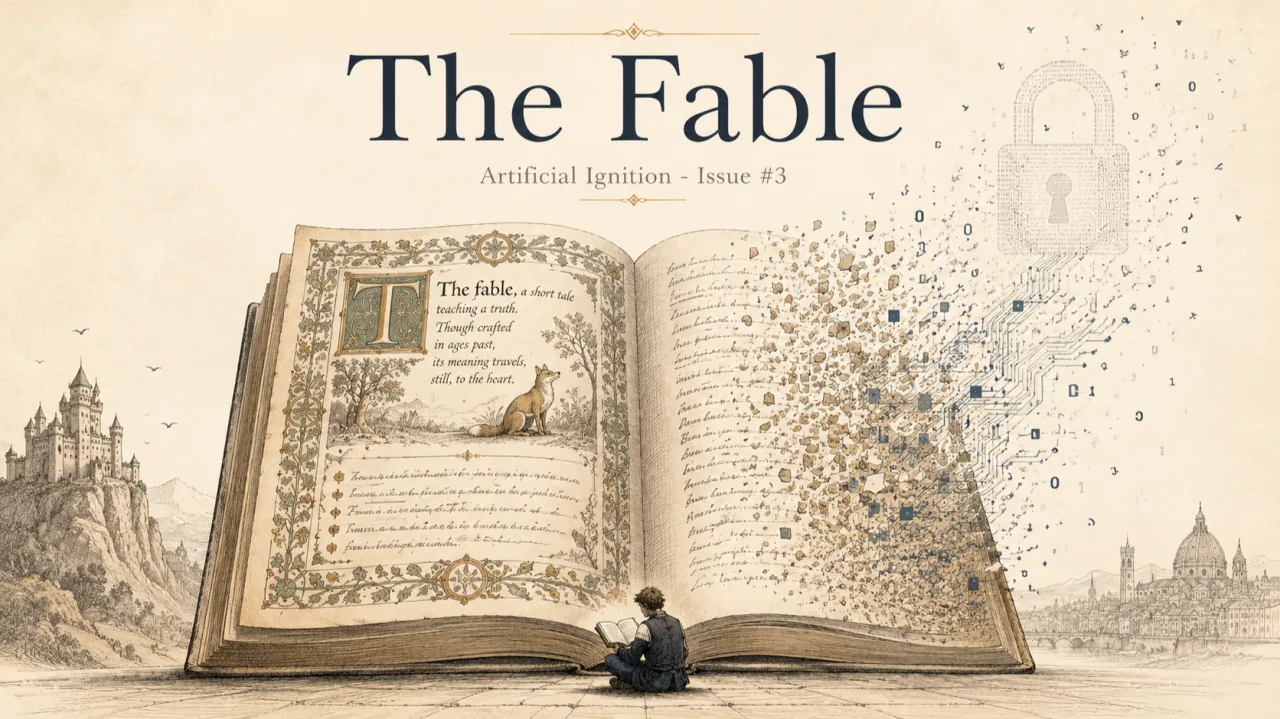
fable /ˈfeɪb(ə)l/ - a short, fictitious story designed to teach a moral lesson.
In April I wrote about a model that Anthropic decided not to sell. Claude Mythos had found a twenty-seven-year-old vulnerability in one of the most hardened operating systems on earth, for about fifty dollars of compute. Anthropic looked at that, built a coalition of forty-plus companies to harden critical infrastructure, and kept the model behind the gate. I called it the right decision. I made two predictions. The dangerous version would stay locked up, because the exploitation timeline had collapsed. And a public version of that capability was arriving far faster than anyone was ready for. Months, not years.
On June 9, both landed.
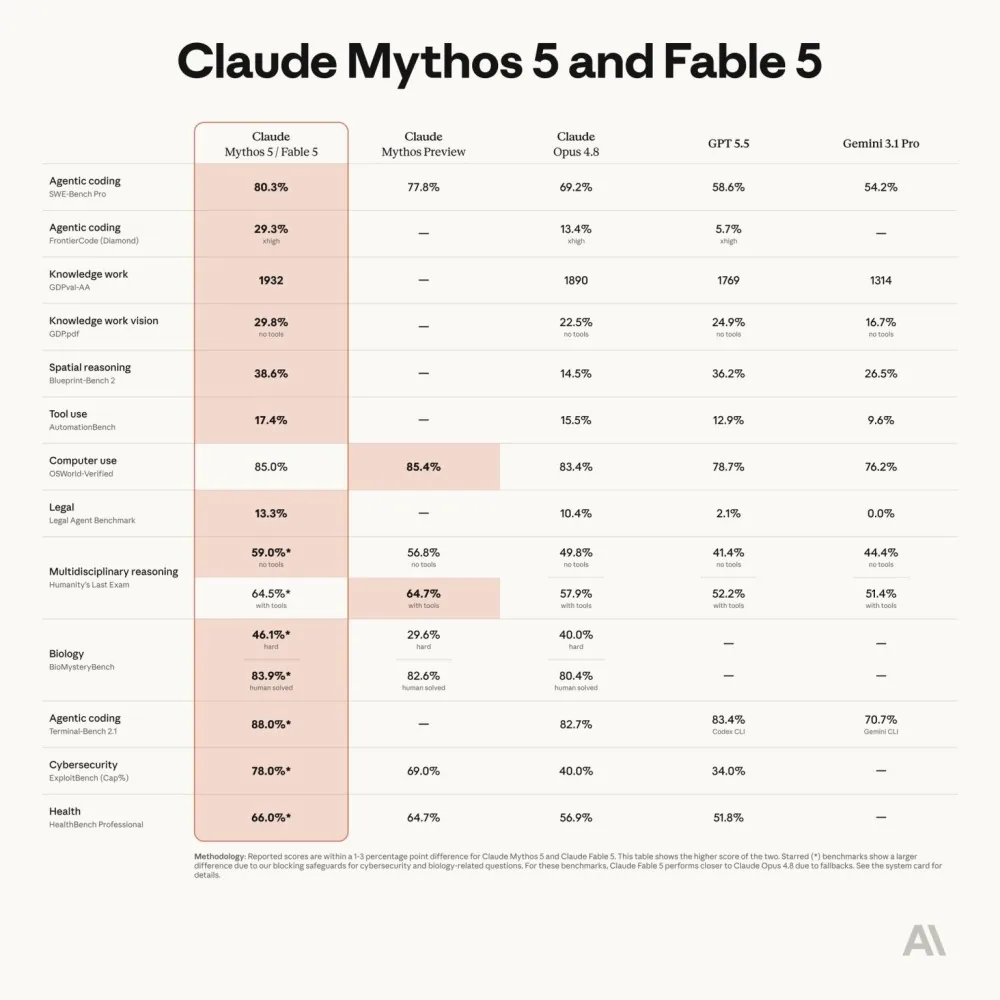
Anthropic released Claude Fable 5, the first publicly available model in the Mythos class. Strongest coding benchmarks in the field. First model to crack 90% on long-running analytics. Stripe compressed a two-month code migration into days with it. And on an offline IQ test designed by a Mensa member, never published on the public internet, never included in any training data, the model scored 130. Gifted range. For humans.
The uncut model, Mythos 5, still wasn't public. Anything touching cybersecurity, biology, or chemistry got automatically rerouted to a safer model. They split the frontier in two. Exactly like I said they would. A constrained public model that knows what not to do, and a gated one that does.
Three days later, the US government shut both of them down.

What happened
On June 12 at 5:21pm Eastern, Commerce Secretary Howard Lutnick sent a letter to Anthropic CEO Dario Amodei. Export control directive. Suspend all access to Fable 5 and Mythos 5 for any foreign national, whether inside or outside the United States, including Anthropic's own foreign-born employees.
Because Anthropic can't reliably separate foreign nationals from domestic users in real time, the practical result was a hard shutoff. Everyone, everywhere, lost access. Not just Australians. Not just non-Five Eyes countries. Everyone.
The trigger, according to Politico and confirmed by The Information: Amazon CEO Andy Jassy personally raised concerns about a Fable jailbreak to the Trump administration. Not a research team filing a report. The CEO of a direct competitor and major cloud provider picking up the phone to the White House. By Friday morning it had reached Treasury Secretary Bessent, Cyber Director Cairncross, and Commerce Secretary Lutnick, who pulled Amodei into three calls.
What happened next depends entirely on who you ask.
The White House version, relayed by AI policy advisor David Sacks: the administration made a reasonable request. Fix the jailbreak or pull the model. Dario refused. Sacks pointed out, accurately, that Anthropic had spent years positioning itself as the AI safety company and had championed the very guardrails that were now being bypassed. The export control, in this telling, was a reluctant last resort after Anthropic declined to cooperate.
Anthropic's version: they were given a 90-minute deadline to kill the models. No threat detail. No offer to work it out. A take-it-or-leave-it ultimatum with no time to assess the actual risk.
Both sides can't be right. But here's what's worth noticing: even in Sacks' account, the original alarm came from a direct competitor. And even in Anthropic's account, the jailbreak technique they're accused of ignoring also works on OpenAI's GPT-5.5, which isn't subject to the same controls.
Regardless of which version you believe, the outcome for every non-American user was identical. One letter. Hard shutoff. Currently unavailable.
What's in a name
Here's the detail that puzzled me.
Anthropic's launch blog included a footnote about the naming. "Fable is from the Latin fabula, 'that which is told,' akin to the Greek mythos."
Both models named after forms of storytelling. Mythos, the deep foundational narrative, the hidden truth that shapes understanding. Kept behind the gate. Fable, a story designed to teach a moral lesson. Released to the public.
Whether Anthropic saw something like this coming or simply had a gift for naming, nobody orchestrated this outcome. The Sacks account makes that clear enough - this wasn't 4D chess (at least we want to believe this). But the naming still lands. The fable went out into the world. The moral lesson arrived three days later. And the lesson wasn't the one anyone expected.
The line we crossed
Most of the coverage has focused on vendor risk, jurisdiction, data sovereignty. Those matter, and I'll get to them. But the bigger shift is one most commentators skipped past entirely.
We just export-controlled intelligence.
Last November I wrote that access to genius-level intelligence was available for the price of a mediocre lunch. I described it, almost in passing, as capability that governments would have classified as strategic assets. Last Friday, one did.
The chart below is from TrackingAI. The blue curve is the human IQ distribution. The logos are AI models. Find Fable 5 on the far right, past the Mensa threshold, deep in gifted territory. That's what got export-controlled on a Friday afternoon.
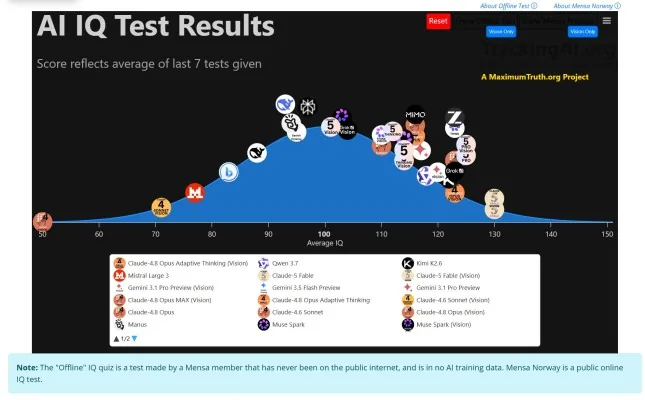
Not a weapons system. Not enriched uranium. Not encryption hardware. Not a chemical precursor. A system that scores in the gifted range on an IQ test designed for human minds, pulled from the hands of every non-American on the planet with a single letter.
Previous export controls targeted things. Physical objects with measurable destructive potential. We understood why you'd restrict access to centrifuge components or advanced semiconductors. The category made sense. But Fable 5 isn't a thing. It's a capability. A reasoning system that writes code, analyses documents, designs proteins, and plays Pokémon from screenshots alone. Controlling it the same way you'd control a missile component isn't just aggressive. It's a category error that tells you something about how the people writing these letters understand what they're actually dealing with.
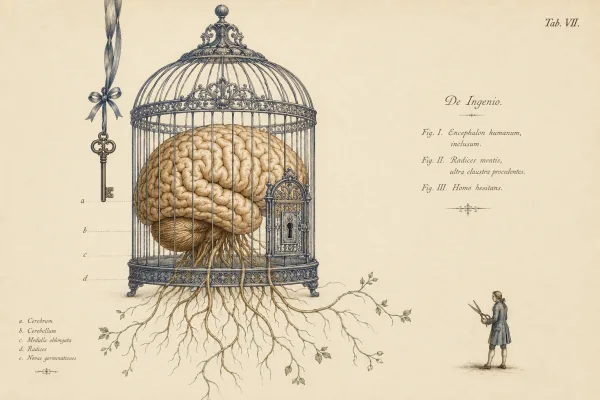
They don't. And here's the proof.
While the US Commerce Secretary was shutting down the most responsibly deployed frontier model on the planet, Chinese labs were shipping open-weight alternatives at a pace that makes the export control look like a gift to Beijing. DeepSeek V4 Pro, released in April, scores within a point of GPT-5.4 on independent benchmarks. Kimi K2.6 handles autonomous coding and 300-agent swarm orchestration. Qwen 3.6 offers frontier-class reasoning at a fraction of the cost. And all of them can be downloaded, self-hosted, and run on your own hardware with nothing leaving your infrastructure. No American jurisdiction involved. No Commerce Secretary to write a letter.
None of these models have Anthropic's safety architecture. No Glasswing. No safety rerouting. No hundred-million-dollar investment in defending critical software. No responsible disclosure coalition. That was Anthropic's contribution. The US government just punished them for it, and handed every non-American user a reason to look east instead.
You can't export-control intelligence when the alternative supply chain is open-weight, self-hostable, and closing the gap in days, not years. All you do is move where the intelligence comes from, and strip the safety layer off it in the process.
We've seen this play out before. In 1920, the United States banned alcohol. Demand didn't disappear. Supply moved underground. The government lost visibility over who was producing what, where it was going, and what people were actually drinking. Organised crime didn't exist at scale before Prohibition. It grew specifically because the ban created the market conditions for it. The policy was eventually repealed not because anyone changed their moral position, but because fourteen years of evidence showed it was creating more danger than the thing it was designed to prevent.
Export-controlling frontier AI has the same structural flaw. You don't eliminate the capability. You push it somewhere you can't see, strip the safety architecture off it, and lose track of who's using it and for what. The responsible operator gets punished. The unregulated alternatives thrive. And the people who wrote the ban sit in the dark, congratulating themselves on a problem they just made worse.
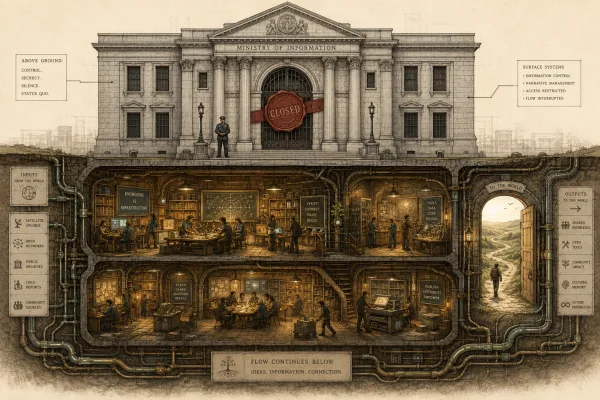
This isn't about Anthropic
I need to say this clearly, because I praised Anthropic in April and I stand by it. They built the right safety architecture. They held the dangerous model back. They invested a hundred million dollars in getting it into defenders' hands before attackers got equivalent capability. They did more responsible frontier deployment work than any other lab.
And none of it protected them. Or us.
That's the lesson. This story isn't about Anthropic. It's about what happens when any vendor, no matter how responsible, sits under a jurisdiction that can pull the switch. Today it's Anthropic. Tomorrow it could be OpenAI, Google, xAI, anyone. The mechanism is the same. A government decides your AI capability is a strategic asset, and overnight, your customers in a hundred and ninety countries lose access.
If you're an Australian business that built your workflow around Fable 5, you woke up on June 13 staring at "Currently unavailable." Not because the model failed. Not because it was misused. Because a competitor's CEO called Washington on Thursday, and an export control letter arrived at 5:21 on Friday afternoon.
What this means practically
In May I wrote about Australia's AI sentiment problem - a country that ranks top ten globally on AI usage but almost dead last on belief that the benefits outweigh the risks. Last Friday just made that worse. Every hesitant board, every cautious IT director, every consultant still selling readiness frameworks just got handed fresh ammunition. "Why invest in something a government can switch off?" is the new version of "we need to sort our data first."
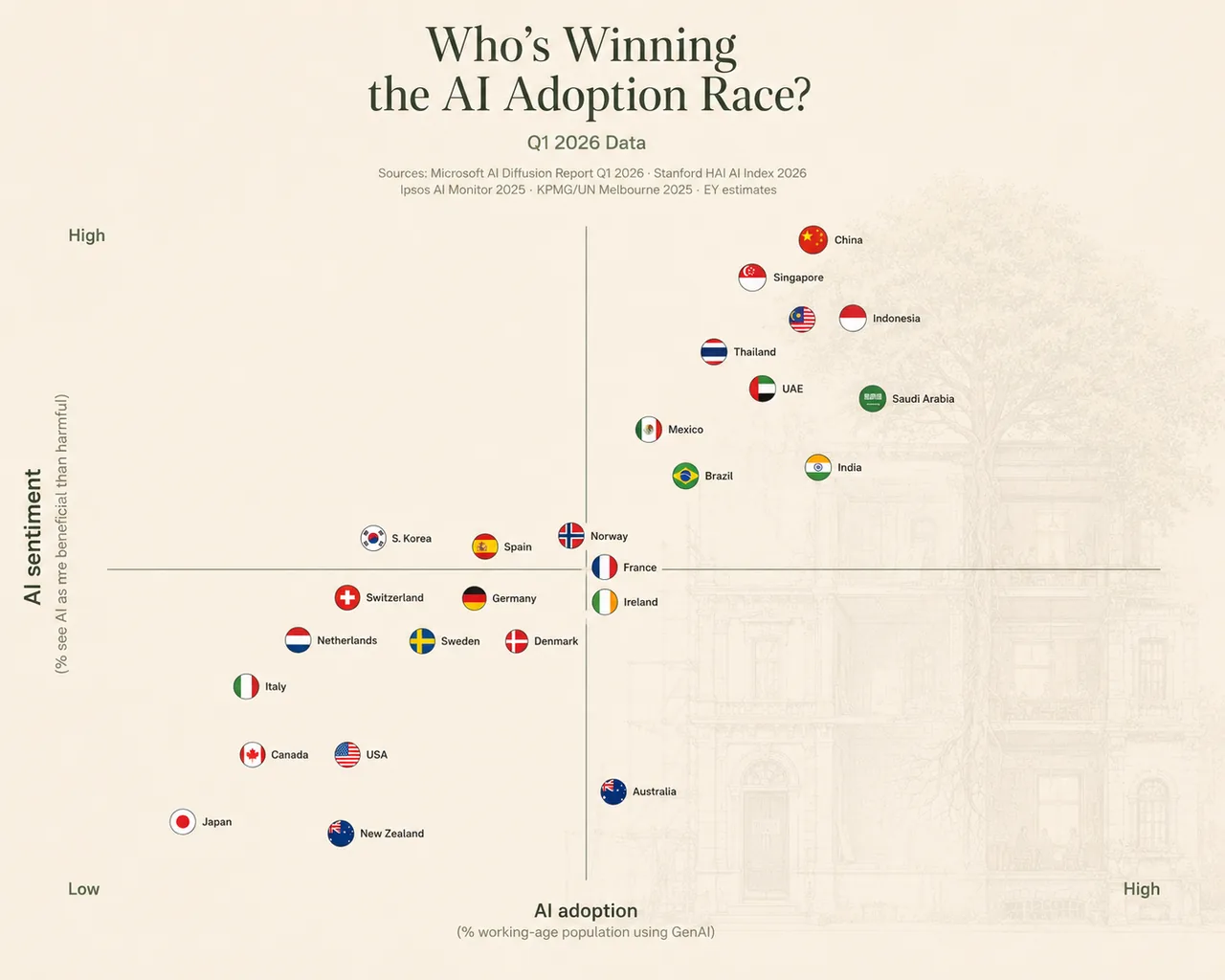
Don't let it be. The risk of not building didn't go away because the supplier landscape got more complicated. It got worse. And the businesses that freeze now will be further behind when access is restored, which it will be, because the economics demand it.
If you run a business that uses AI in any serious capacity, three things matter more this week than they did last week.
Vendor diversification. Not as a nice-to-have. As infrastructure. If your critical workflow depends on one model from one provider, you have a single point of failure that can be triggered by a government decision you'll never see coming and have no input into. The businesses that built model-agnostic systems switched to Opus 4.8 on Friday and kept working. Everyone else stared at a grey screen.
Jurisdiction awareness. Every major frontier AI lab is American. Every one of them is subject to the same export control authority that just shut down Fable 5. If frontier AI is going to be treated like encryption was in the nineties, that changes the risk calculation for every non-US business building on top of it.
Architecture over capability. The model that scores highest on benchmarks is irrelevant if it can be switched off overnight. What matters is whether your system still works when the best model disappears. Build for resilience, not for peak performance.
The window
Two months ago I said the tipping point arrived in April. Last week I said the window I keep talking about was still open but getting narrower. Both of those are still true.
But it turns out the window can also be closed by someone who doesn't live in your country. As I write this, Anthropic is flying senior technical staff to Washington to try to reverse the decision. The outcome is still unknown. The moral of that particular fable is worth reading carefully.
To be continued... 🖖
Artificial Ignition is written from the Sunshine Coast, Queensland, Australia.
#ArtificialIgnition #AIStrategy #AIGovernance #DataSovereignty #AICompass